


Strategy
Lighthouse Canton Positive For 2027 Business Expansion
In late July Lighthouse Canton developed a wealth platform for NRI clients; it has made a number of senior appointments and, earlier this year, entered a strategic partnership with a Taiwan-based investment house. This is a business in growth mode. We talk to its UAE chief executive.
Lighthouse Canton, a Singapore-headquartered global investment institution that extends its reach into the Middle East, India and the UK, is confident that 2027 will be even busier than this year has been so far.
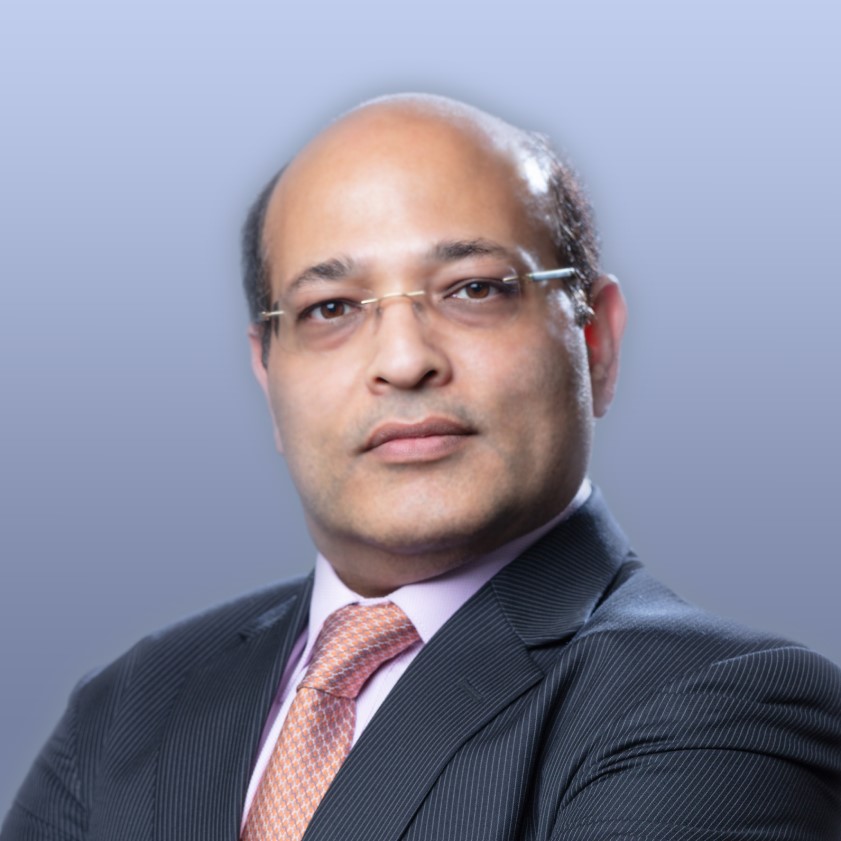
Dubai-based, Prashant Tandon (main picture), who is CEO for the United Arab Emirates at the organisation, reflected on the rapid but measured rise of this business. Lighthouse Canton, which was founded in 2014, manages more than $6 billion of AuM, as of 30 June.
“The objective for us has always been to build a global institution,” he said "and that ambition has been there since inception.”
“We intend to become a fully-integrated financial services business and the leading player in all the geographies we operate in,” he said, asked about where the organisation wants to be at the end of this decade.
Tandon frames the current pace of growth as assembling a picture that was always part of the plan, rather than a reactive expansion phase. The business is set up for clients who have varied needs and, in many cases, look at different jurisdictions as they diversify risks in an uncertain world, he said.
Serving cross-border clients
Lighthouse Canton operates through regulated entities in India,
Singapore, the UAE and London. In Tandon's view, this approach
gives the organisation a closer, more direct handle on the
regulatory and structural considerations that come with serving
clients whose lives span multiple countries.
"Client needs have shifted from wanting someone to manage their money to needing someone to manage the complexity of their situation, across jurisdictions, currencies and life decisions," Tandon said. For startup founders, that engagement can begin at the holding structure and tax efficiency stage, running all the way through to a public listing.
The India dynamic
In late July, the organisation launched Global Indian, a wealth
management platform for non-resident Indians (NRIs) and overseas
investors with financial affairs spanning multiple jurisdictions.
Global Indian draws on the organisation’s regulated entities in
India and GIFT City, together with its international platforms
across Singapore, Dubai and the UK, supported by Keenai, its
proprietary wealth technology offering.
The organisation recently appointed Michael Darriba as MD, key clients and institutions in Dubai; Abhay Laijawala as MD and chief investment officer for India; Gurjeet Sohi as MD and head of wealth management for India; Muffazal Arsiwalla as MD and head of capital solutions and advisory for India; and Angela Saik as managing director, wealth management in Singapore.
Switching eastwards, in April 2026, the organisation entered a strategic partnership with Taiwan-based investment institution Draco Evolution.
Expansion needs financial resources, and Lighthouse Canton obtained capital firepower late in 2025. It unveiled a $40 million strategic investment round, its first fundraising exercise.
Risk tolerances
Tandon said one theme is that clients
are being relatively tolerant of investment risks but
want to mitigate risks around the structures, jurisdictions
and legal entities that they might engage with.
“Our clients are very risk-averse on the 'plumbing’ side, but their appetite for risk on the asset allocation side is more evolved,” Tandon told WealthBriefing. “They have zero tolerance for structural risks.”
Tandon draws a sharp line here: clients are risk-seeking on asset allocation, comfortable with illiquidity and volatility in private equity and private credit, but have zero tolerance for structural risk around custody, jurisdiction, succession and other irreversible decisions. Clients are also increasingly planning for multiple future scenarios rather than a single outcome, weighing optionality with regard to where their children study, where they eventually retire, and what currency their balance sheet sits in 15 years from now.
The structuring capability behind this work is deliberately multi-disciplinary, bringing together banking and accounting expertise in-house and drawing on legal and tax specialists from strategic partners where required, rather than being narrowly focused on cross-border tax planning.
Company founders and owners will want advice on how a company should be structured along with tax, reporting and other requirements. Advisors don’t just look at a client’s current situation but consider future scenarios that could arise and how they could benefit that client and his/her family.
“The approach has led us to have relationships with clients that are far deeper than the transactional advisory relationship,” he said. "There can be contacts between the business and different generations of clients’ families. That client base spans both Baby Boomers, who prefer relationship-led, hands-on service, and Gen Z clients, who are tech-native and expect on-demand access to CIO reports and podcasts, all served through the same infrastructure."
Client attrition is less than 1 per cent, Tandon said, a fact that fills him with pride at a time when a top concern for wealth managers is client retention.
“Clients don’t see us as mere service providers…they look at us as in-house advisors and a sounding board for their problem statements across asset allocation, risk management, structuring, family governance etc,” Tandon continued.
Dubai’s position
This publication asked Tandon how Lighthouse Canton’s business in
Dubai is faring during what has been a difficult time in the
Gulf.
“There was nervousness and disruption for a few weeks [earlier in 2026]…people have learned to price this episodic change. With [diplomatic] talks happening, commercial activity bounced back pretty fast."
“The UAE has been at the heart of activity in the region, and I see no reason for it not to bounce back. This is not a place where capital visits opportunistically,” Tandon said.
Capital in the West and East is increasingly flowing both ways and the “UAE sits in the intersection of this,” he said. “Talent continues to be attracted to the UAE.” The talent corridor mirrors the capital one, with experienced private banking, alternatives and fund management professionals moving from London and Geneva to the UAE and Singapore.
Tandon points to a broader West-to-East capital flow, shaped in part by tax-driven relocation trends affecting several markets, including the UK.
Family offices
A core business area for Lighthouse Canton is the family office
sector, for example advising clients on how to set these up
and the structures that come into play, such as DIFC foundations,
established by legislation in 2018, and Variable Capital
Companies (VCCs) in Singapore, launched in 2020. Across all
booking centres, Tandon cited GIFT City in India, Singapore's
Section 13 VCC regime and DIFC/ADGM foundations in the UAE as
active areas of rising demand.
With Global Indian scaling, new leadership in place across markets, and family office demand rising across every booking centre, Tandon's read on 2027 looks less like optimism and more like a plan already in motion.