


Investment Strategies
Energy, Hormuz, and the Family Office Portfolio
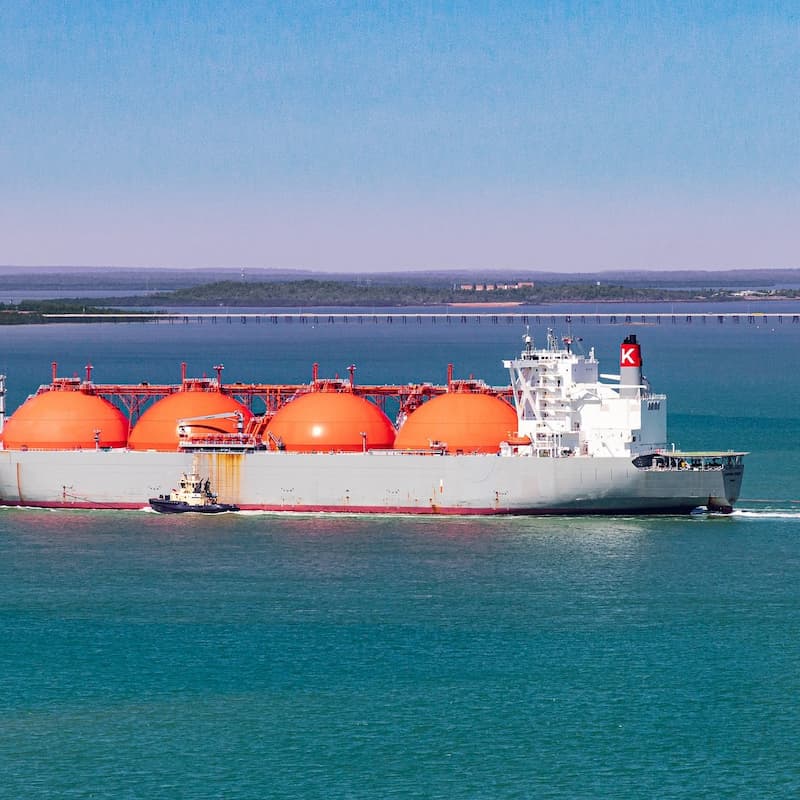
The author argues – as current events indicate – that energy shocks should no longer be treated purely as commodity price events. They are increasingly infrastructure events.
The following article is from Dr Paul Hayman, the founder of Hayman Advisory, specialising in geopolitical trajectory analysis for family offices and institutional investors. Dr Hayman is based in the UK, but his insights are global in their relevance and we hope readers find this content thought-provoking. The usual editorial disclaimers apply to views of guest writers. To comment and provide feedback, email tom.burroughes@wealthbriefing.com and amanda.cheesley@clearviewpublishing.com
When the Strait of Hormuz moves to the centre of a geopolitical crisis, family offices with cross-border portfolios face a familiar temptation to reach for oil price sensitivity analysis, stress-test equity positions against an energy shock, and wait for the situation to stabilise. That response is not wrong, but it is insufficient.
Nearly a fifth of global oil consumption transits the Strait each day. Any sustained disruption does not stay contained in energy markets, but propagates through inflation expectations, monetary policy trajectories, emerging market debt dynamics, and the operating costs of businesses across portfolios. The transmission mechanisms are well understood. What is less well understood is that the current disruption is not an isolated shock. It is a data point in a trajectory that has been building for several years. Trajectory analysis therefore provides a more actionable guide to positioning than conventional scenario planning.
To understand why, it helps to distinguish between two types of chokepoint risk. The first is inadvertent disruption: military activity, miscalculation, or insurance market withdrawal that closes a transit route as a side effect of conflict. The second is deliberate leverage: the calculated use of chokepoint threat as a bargaining instrument in a wider strategic negotiation. These are not the same risk, and they do not have the same trajectory.
Previous episodes of Hormuz tension – 1984, 1987, 2019 – were predominantly of the first type, and they resolved relatively quickly in part because the implicit US security guarantee for Gulf transit was credible and the costs of testing it was prohibitive. What has changed is that guarantee's credibility is no longer unquestioned. A US visibly reorienting its strategic attention, renegotiating the terms of its regional commitments, and engaged in its own direct confrontation with Iran has altered the deterrence calculus. Regional actors have updated their assessment of what chokepoint leverage can achieve without triggering a decisive Western military response. That update is what makes the disruption a trajectory data point rather than an isolated episode – and it is why de-escalation, if it comes, will not simply restore the pre-crisis baseline.
The hidden geopolitical assumptions in energy
exposure
Most family office energy exposure assessments start from price.
The focus tends to be on how a sustained move in oil benchmarks
affects portfolio valuations, which sectors benefit and which
suffer, and what hedging instruments are available. These are
legitimate questions. But they embed an assumption that is rarely
made explicit – that the architecture of global energy
supply (the routes, the relationships, and the settlement
mechanisms) will remain broadly stable while prices adjust.
That assumption has been progressively weakened over the past three years. The Russia–Ukraine conflict demonstrated how rapidly a major energy supplier can be removed from Western market access – far faster than most portfolio risk models assumed. The Middle East crisis adds the further dimension that the physical infrastructure through which energy moves is now itself a variable, not a constant. Chokepoint risk – the vulnerability of specific geographic nodes –has moved from a tail risk to a structurally recurring feature of the energy landscape.
For family offices, this matters because energy assumptions are embedded in portfolios in ways that are not always visible. Real estate valuations in energy-intensive markets, private equity positions in manufacturing businesses, allocations to emerging market debt in oil-importing economies – all these carry implicit views on energy supply stability. The question is not whether those views are right or wrong today, it is whether they were ever explicitly adopted, and whether they remain appropriate given where the trajectory points.
Trajectory analysis: three sequences worth
watching
Trajectory analysis asks not whether an event will occur, but
what the next likely layer of escalation looks like and what
decision windows it creates. The relevant question is therefore
not whether Hormuz will be disrupted – it already is to
varying degrees – but what sequences of escalation or
de-escalation are plausible, and what each implies for portfolio
positioning.
Three sequences merit particular attention.
Managed disruption with rerouting. The current level of disruption persists but stops short of full closure. Tanker insurance premiums rise sharply, and some flows reroute via the Cape of Good Hope, extending transit times and cost. Oil prices stabilise at elevated levels. This scenario is inflationary but manageable for most developed-market portfolios, with the primary transmission channel running through interest-rate trajectories in economies still sensitive to energy-driven inflation.
Escalation to partial closure. A material reduction in Hormuz throughput – whether through direct military action, mining, or insurance market withdrawal –produces a supply availability shock rather than simply a price shock. Strategic reserve drawdowns and diplomatic emergency mechanisms come into play. Portfolios exposed to Asian manufacturing supply chains, European energy-import-dependent equities, and emerging market dollar debt face correlated drawdown risk that geographic diversification alone does not mitigate.
De-escalation with structural residue. A negotiated or military resolution reduces immediate disruption risk, but the episode durably alters the behaviour of three sets of actors whose decisions collectively determine the operational reliability of the Strait. Insurers revise their baseline risk models, raising floor premiums and tightening war-risk exclusion clauses regardless of the diplomatic outcome.
Tanker operators accelerate fleet repositioning decisions that were already under consideration. And regional states draw their own conclusions about the coercive utility of chokepoint leverage – conclusions that survive the ceasefire that prompted them. In this sequence – arguably the most plausible over a twelve-month horizon – the Strait remains physically open but operationally more expensive and strategically less predictable. The risk does not end – it reprices.
Three practical implications for investment
committees
1. Audit implicit energy assumptions before stress-testing
explicit exposures. The standard energy stress test asks
what happens to portfolio value if oil prices move by a defined
increment. A trajectory-informed audit asks a prior question:
which portfolio positions were sized or timed on the assumption
of broadly stable energy infrastructure, and what is the range of
outcomes if that assumption no longer holds? In practice, this
often becomes a short internal exercise for investment
committees: identifying which holdings implicitly rely on stable
energy transit routes and which would behave differently if
chokepoint risk became structural rather than episodic.
2. Treat the de-escalation scenario as a positioning window, not an all-clear. If markets price relief on any ceasefire or diplomatic development, that repricing is likely to be faster than the structural adjustment in insurer and operator behaviour. For family offices with longer time horizons than institutional investors, a de-escalation rally in energy-adjacent equities may represent an exit opportunity rather than a re-entry signal.
3. Watch the leading indicators, not the headline price. Tanker insurance premiums, war-risk surcharges, and Lloyd’s market withdrawal decisions are often more useful forward indicators than oil benchmarks. Episodes like this rarely arrive without warning; they are typically preceded by quieter signals in insurance markets, shipping behaviour, and regulatory positioning.
From price to infrastructure risk
The shift that trajectory analysis captures is ultimately a shift
in the nature of energy risk itself. For most of the post-Cold
war period, energy risk for sophisticated portfolios was
primarily a price risk – a question of how commodity market
movements affected valuations. Infrastructure risk, the
possibility that the physical architecture of global energy
supply might itself become unreliable, was real but remote.
That balance has changed. The Russia–Ukraine conflict made infrastructure risk concrete for European energy markets. The Hormuz disruption makes it concrete for global oil flows. These are not isolated episodes, but rather successive data points in a trajectory toward a world in which physical supply routes are themselves strategic variables.
One practical diagnostic question therefore becomes unavoidable for investment committees: which holdings in the portfolio implicitly assume that major global energy transit routes remain reliably open? If the answer is unclear, the portfolio may be carrying more geopolitical exposure than its formal risk models suggest.
Price sensitivity analysis remains necessary, but it is no longer sufficient. The committees best positioned to navigate this shift will not be those with the best commodity forecasts, but those that have begun auditing the geopolitical assumptions embedded in their portfolios.
What this means for family offices
For investment committees, the implication is straightforward.
Portfolios built on the assumption that global energy transit
remains frictionless may therefore carry hidden geopolitical
exposure. Identifying those assumptions early creates decision
windows that conventional price-based risk models often miss.

Paul Hayman
About the author
Dr Paul Hayman is founder of Hayman Advisory, specialising in
geopolitical trajectory analysis for family offices and
institutional investors. He holds a PhD in International
Relations and an LLB, and has taught postgraduate students at
QMUL and The Open University on China-West strategic competition
and international policy analysis.