


Alt Investments
The Upcoming Uranium Supply Crunch
Over the past two years, the positive narrative around uranium has been driven almost entirely by demand but this could be about to change. Supply challenges may soon become the dominant force.
Nuclear power is staging something of a renaissance in the West and other regions, with approaches such as small modular reactors, for example, gaining attention. Decarbonizing energy puts nuclear in the frame, along with renewables. A realization that baseload electricity generation isn’t dependent on weather also plays to nuclear power’s case. Historically, of course, concerns about safety and up-front costs have been problems. With nuclear on the rise, however, it means that demand for uranium will become a key issue.
Goehring & Rozencwajg, a commodities-focused investment firm in New York, argues that the uranium market is entering a sustained period of structural deficit. The firm contends that while demand for nuclear power is set to rise significantly through 2040, supply is struggling to keep pace – with production challenges at major producers such as Kazatomprom and Cameco highlighting the constraints. The firm thinks that the next phase of the market will be driven less by incremental demand surprises and more by persistent supply tightness – a dynamic that could underpin a longer-term re-rating in uranium prices. To explore the terrain is Adam Rozencwajg, a co-founder and managing partner at Goehring & Rozencwajg. (More on the author below.)
The editors are pleased to share these views; the usual editorial disclaimers apply. To comment and get involved in the conversation, email tom.burroughes@wealthbriefing.com and amanda.cheesley@clearviewpublishing.com
Global uranium markets have been awash in bullish developments over the past two years, as governments, utilities, investors, and even long-sceptical environmental groups have begun casting aside the narratives that constrained nuclear power for four decades. After years of stagnation – during which global generating capacity failed to recover from Fukushima – it was only in 2023 that nuclear output finally crept past its 2010 peak. Today, the outlook for nuclear power looks radically different.
In its newly-released report, the World Nuclear Association (WNA) lays out a series of projections based on its assessment of global nuclear trends. From a 2025 base of 398 GWe of installed generating capacity, the WNA’s base-case scenario now expects capacity to reach 746 GWe by 2040 – an increase of roughly 90 per cent from today’s levels. On the uranium fuel side, the WNA now expects global reactor requirements to total roughly 179.1 million pounds this year. Even the most conservative projection puts 2040 demand at 278 million pounds – almost 100 million pounds more than current consumption.
Given these enormous growth assumptions, the expansion of uranium supply over the next 15 years will be critical and, on that front, the challenges are already beginning to surface. The supply problems emerging today will only deepen the structural deficits now developing in global uranium markets.
The uranium market in 2025 has already fallen in deficit when investment demand is included, and we believe uranium markets next year will slip into outright operating deficit. We estimated uranium mine supply in 2025 will reach 160 million pounds, secondary supply will be approximately 25 million pounds, and investment demand will approach 10 million pounds – producing a deficit of 5 million pounds. For 2026, we estimate both uranium mine supply to be down and reactor demand to be up, producing an outright deficit in the global uranium market before investment demand is factored in.
Production downgrades
Issues are appearing across several fronts. In Kazakhstan, the
eastern anchor of global uranium supply, Kazatomprom – the
world’s largest producer – continues to struggle with its
production expansion plans.
In a development that stunned the uranium analytical community, Kazatomprom announced in September 2024 that it was cutting its 2025 production forecast from 80 million pounds to 69 million. Much of the blame for this reduction had been attributed to shortages of sulfuric acid but far deeper production issues were already embedded in the company’s massive Budenovskoye 6 and 7 greenfield developments – projects beset by both political complications and geological difficulties.
In its first-half 2025 financial release, the company attributed most of the production downgrade to “production adjustments” at Budenovskoye. It also noted that financing had finally been secured for an 800,000-tonne sulfuric acid plant – critical for the viability of the project – and construction was underway on additional Budenovskoye processing facilities expected to add 6,000 tonnes of annual capacity. No timeline was provided for completion; the release offered only that construction was progressing in accordance with its schedule.
The project was expected to play a central role in closing the emerging structural gap between global uranium supply and demand. However, it now appears that much of the originally envisioned output may never materialize.
Western setbacks
Uranium supply problems are not confined to the eastern
hemisphere. Cameco – the largest uranium producer in the
West – has also been forced to trim its 2025 production
guidance for the McArthur River mine, one of the world’s premier
uranium assets.
The company had originally projected that McArthur River would produce 18 million pounds of uranium in 2025. However, due to development delays and slower-than-expected progress on ground freezing operations, Cameco has lowered its forecast to between 14 and 15 million pounds.
Cameco has not indicated whether these issues will affect its 2026 production, but the implications are clear. Production setbacks at McArthur River add yet another data point to the growing evidence that supply constraints will only widen the uranium market’s emerging structural deficit in the years ahead.
Future uncertainties
Finally, it is imperative to address one potentially significant
risk to future supply. One of the largest sources of new uranium
expected to enter the market between now and 2030 is NexGen’s
Arrow/Rook I project in Saskatchewan. Currently, only one
approval remains before construction can begin: authorization
from the Canadian Nuclear Safety Commission (CNSC). If granted,
and there are no immediate reasons to expect difficulties, the
project can move directly into construction. And it is at that
point, that the real challenges may begin.
The company has stated that it will take just under four years from the start of construction to first production. If the CNSC grants its approval for the Rook project at its meeting early next year, that timeline would imply initial uranium output in early 2030. However, there is a meaningful risk that Rook’s schedule will slip. This is an enormous undertaking – one that requires not only the development of the mine itself but also the construction of a full ore- and uranium-processing complex.
NexGen is confident that it can meet its aggressive timetable, but given the realities of northern Saskatchewan – its climate infrastructure limitations and logistical constraints – holding to that schedule will be extremely difficult. Delays would not reflect the quality of the project or its management but rather a natural consequence of the complexities inherent in building a mine of this scale. Large-scale mine developments always present unforeseen challenges, and it would be highly unusual for a project of Rook’s scale to proceed without encountering setbacks.
Rook is projected to begin production at 21 million pounds per year, ramping to as much as 30 million pounds – a contribution unmatched by any other new uranium project over the next decade. Any delay in achieving those volumes will further widen the global uranium market’s structural deficit, particularly as demand accelerates into the 2030s.
A widening deficit
The WNA’s forecast that uranium demand is set to surge between
now and 2040 appears achievable given nuclear power’s formidable
advantage in producing low-cost, carbon-free electricity. What
remains far less clear is where the necessary uranium supply will
come from.
Problems are already emerging at several of the world’s largest prospective sources of new production, and the structural deficit in global uranium markets looks poised to widen sharply in the near term as these supply issues continue to accumulate.
Over the past two years, the positive narrative around uranium has been driven almost entirely by demand but this could be about to change. Supply challenges may soon become the dominant force pushing uranium prices materially higher in the short term.
About the author
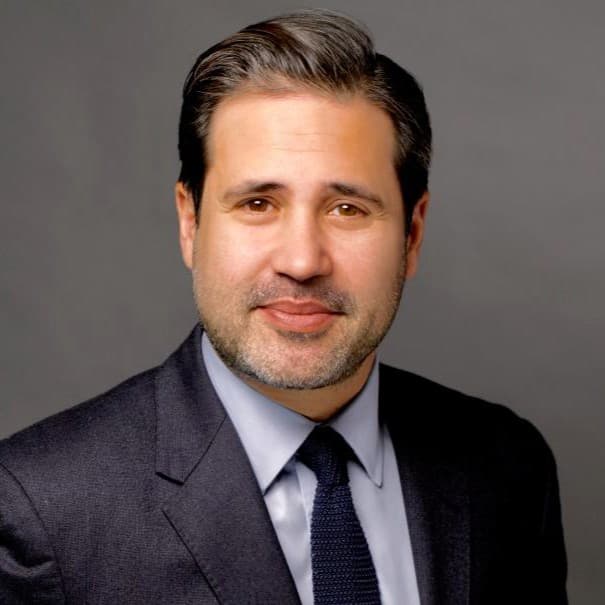
Adam Rozencwajg
Before co-founding G&R in 2015, Adam Rozencwajg (pictured above) served as vice president at Chilton Investment Company, where he partnered with Leigh Goehring to manage the Chilton Global Natural Resource Fund from 2007 to 2015. Under their leadership, the fund reached peak assets exceeding $5 billion. Earlier in his career, Rozencwajg gained experience in financial markets as part of the investment banking division at Lehman Brothers from 2006 to 2007.